
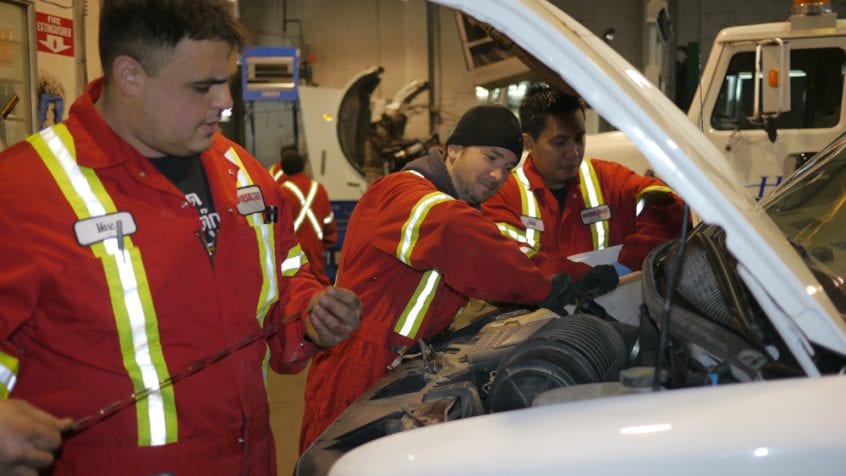
If you run a truck, trailer or bus in British Columbia, you already know the Commercial Vehicle Inspection Program (CVIP) isn’t optional. Depending on the type and weight of your vehicle, it’s due every six months or once a year, and a fail means your unit sits until it’s fixed. That’s missed deliveries and lost money.
The good news is that most fails aren’t mysterious. They come from ordinary wear that nobody noticed on a daily walkaround. Here’s what we see most often at our shop.
1. Brakes
Brakes are one of the most common reasons for a fail, and BC’s mountain passes and long grades don’t help. What gets trucks rejected:
- Linings or pads worn below the minimum thickness
- Air leaks you can hear, or leaks past the allowed pressure loss
- Slack adjusters that over-stroke, or pushrod travel that’s uneven across an axle
- Cracked drums, badly grooved rotors, broken return springs, or contaminated shoes
If the inspector hears a leak or sees uneven stroke, you’re not leaving with a decal. And if your ABS warning light stays on, expect that to be flagged too.
2. Steering and Suspension
Salt, rough roads and years of highway vibration wear these parts down slowly, and if you drive the same truck daily, you probably won’t feel it. The inspector will, because they check for play with the wheels off the ground. Watch for:
- Too much lash in the steering box, loose drag links, worn tie-rod ends
- Broken or cracked leaf springs, missing U-bolt nuts
- Kingpin movement beyond the allowed limit
- Leaking air bags, cracked rubber bellows, faulty height-control valves
Regular greasing and torque checks go a long way here.
3. Lights and Wiring
Lighting is the easiest category to get right, and it still trips people up. Road salt and moisture work their way into harnesses and junction boxes, and corrosion follows. Inspectors check that every required lamp works. The usual culprits:
- Dead clearance and side-marker lights
- License plate and reverse lights that don’t come on
- Cracked or missing lenses
- Frayed or loose wiring
- Worn or missing reflective tape on trailers
Test your lights with the engine running and the trailer connected. A battery-only test hides voltage drops and bad grounds.
4. Tires, Wheels and Hubs
- Tread below the minimum
- Sidewall cuts, bulges, exposed cord, or tread separation
- Missing or loose wheel nuts
- Cracks around the bolt holes or along the rim
- Hub seals leaking onto the brakes
Uneven wear usually points to alignment trouble or tired suspension bushings. Spotting it early means you replace tires on your schedule, not the inspector’s.
5. Fluid Leaks
This is where people get caught out. The manual grades leaks by severity: seepage that doesn’t form drops (level 1), drops that form but don’t fall (level 2), and drops that actually fall during the inspection (level 3). Where the cutoff sits depends on the component. A brake fluid leak can fail you at level 1. Power steering and engine oil leaks near the exhaust can fail at level 2. In other words, a truck can fail without dripping on the floor.
Fuel, coolant, power steering and axle or transmission seals are all fair game. Wash the chassis before your appointment so leaks are easy to spot and fix beforehand.
6. Glass, Mirrors and the Cab
- Cracks or chips in the driver’s line of sight or the wiper sweep that exceed the allowable parameters listed in the CVSE manual
- Torn/worn wiper blades or washers that don’t spray
- Cracked mirrors, missing spot mirrors, loose brackets
- Exhaust leaks near the cab that could pull fumes inside
7. Coupling Gear and Frame
Easy to forget, but inspectors check fifth wheels, pintle hitches and the frame for wear, cracks and bad repairs. If you pull trailers, look these over closely.
How to Get Through Without Surprises
- Book a pre-inspection. Have a heavy-duty tech go over the unit a couple of weeks before your decal expires. That’s enough time to order parts and do repairs without parking the truck at a bad moment.
- Listen to your drivers. Soft brakes, a slight pull, or air drops that keep showing up in pre-trip reports are warnings.
- Keep your records. A repair and maintenance log makes everything easier.
Dieseltech’s technicians work to BC’s CVIP standards every single day. We’ll inspect, diagnose and repair to standard, so inspection day is a non-event.
Call us to book your next inspection.